

News
Equity Shouldn’t End in Court: Oura’s Lawsuits in the Age of AI Scrutiny
Oura is facing three high-profile lawsuits over disputed stock option promises, each unfolding in different jurisdictions. AI has shifted the balance of power, claimants can now find compliance gaps instantly.

TL;DR
- Oura is facing three high-profile lawsuits over disputed stock option promises, each unfolding in different jurisdictions.
- Common failures: missing board approvals, referencing non-existent equity plans, unclear arbitration clauses, and vague verbal commitments.
- Cross-border equity disputes multiply legal costs, complexity, and reputational risk.
- AI has shifted the balance of power, claimants can now find compliance gaps instantly.
The Headlines No Company Wants to Make
In recent months, Oura Health, the company behind the popular Oura Ring, has been pulled into three separate lawsuits from high-profile figures over disputed stock option promises.
Former NFL quarterback Drew Brees, physician and podcaster Dr. Peter Attia, and marketer-investor Gordy Bal each claim they were promised equity for promotional or advisory work, equity that Oura later disclaimed, citing missing board approvals and compliance failures.
The legal, reputational, and operational risks in Oura’s disputes are a cautionary tale and one that plays out far too often. These outcomes are the predictable result of manual processes, casual promises, and jurisdictional blind spots in global equity management that catch companies off guard every day.
In today’s business environment where more companies are going global from the start, equity must be treated as what it truly is: a binding legal instrument that demands proper governance, airtight documentation, and cross-border compliance from day one.
What Happened: Stock Option Disputes
Oura has recently been drawn into multiple legal disputes over historical equity commitments made during its early growth stages.
In each instance, the common thread is the same: stock options were promised without fully following governance procedures, ensuring documentation accuracy, or adapting to cross-border legal requirements.
In some cases, agreements referenced outdated or non-existent equity plans, creating uncertainty over which plan and which dispute resolution terms should apply.
The result has been a mix of court proceedings and international arbitration, underscoring how quickly informal equity arrangements can escalate into high-stakes legal disputes when they aren’t backed by proper approvals, accurate records, and compliance with every jurisdiction involved.
Why This Matters: Equity Is a Legal Instrument
In many early-stage startups, equity is still treated like a handshake deal, promised casually in a meeting or chat, with paperwork added later, if at all. Add the complexity of cross-border operations, and those shaky promises can quickly become unenforceable, non-compliant, or outright illegal.
In Oura’s case, the company’s defense hinges on a core principle of Finnish corporate law: only the board of directors can authorize the issuance of equity. Promises made by a CEO or founder, no matter how genuinely stated, carry no legal weight without formal board approval. Without it, there’s no valid equity grant, regardless of what was said or assumed.
This is a critical failure point: where internal workflows fail to meet external legal requirements, thus forcing even well-intentioned agreements to unravel into costly, public disputes.
Manual Equity Workflows Are a Lawsuit Waiting to Happen
If equity is managed on spreadsheets, approved verbally, or handled without coordinated oversight from Legal, HR, and Finance, the risk of disputes skyrockets. These are the most common failure points in high-profile equity disputes:
1. Governance Gaps
Equity grants must be legally authorized. Board approvals, compliance with corporate law, and proper documentation are non-negotiable. A verbal commitment, no matter how sincere, has no enforceable weight without formal authorization.
With Slice, every grant runs through jurisdiction-specific approval workflows and is documented automatically, ensuring enforceability everywhere.
2. Jurisdictional Blind Spots
What’s valid in one country can be void or even illegal in another. In Oura’s case, one claim is in U.S. court, another in Finnish arbitration, and a third in yet another jurisdiction, forcing the company to fight on multiple fronts.
With Slice’s global-first compliance engine, governance and documentation are standardized across every jurisdiction, preventing disputes from splintering.
3. Ambiguous Paperwork
Referencing the wrong equity plan or one that doesn’t exist, isn’t a harmless clerical slip up. In Drew Brees’ case, his agreement cited an “Equity Plan 2018” that never existed. That single error forced the courts to decide whether the 2016 or 2019 plan applied, ultimately pulling him into arbitration. This one misplaced reference turned a straightforward equity promise into a costly, public, legal detour.
Slice ties every agreement to the correct plan, with automated checks that prevent such errors before signing.
4. Unclear Dispute Resolution
Arbitration clauses are only as effective as their precision. Oftentimes, companies fail to define exactly who is bound by it, under what circumstances it applies, and in which jurisdiction disputes will be heard. The result? The same underlying equity issue can play out in entirely different venues, with conflicting timelines, procedures, and outcomes. Without precise, jurisdiction-specific language, what was meant to simplify disputes can end up multiplying them.
Slice standardizes dispute resolution terms per jurisdiction, ensuring clarity and enforceability.
5. Promissory Equity Without Valuation
Early-stage equity offers are often made in broad, informal terms such as: “You’ll get 1%” or “You’ll have skin in the game.”” But without a formal valuation and legally binding grant documents, these vague commitments are a ticking time bomb. When the company grows and that 1% suddenly carries real value, the lack of clear terms turns goodwill into a financial liability, and informal promises into full-scale legal battles.
Slice ensures every grant is backed by accurate valuations, legal agreements, and tax-optimized structures.
AI Has Ended the Era of Hidden Equity Mistakes
The most underappreciated shift in the equity landscape is how much power has moved into the hands of employees, advisors, and investors. With AI tools, legal databases, and expert systems, anyone can analyze contracts, uncover compliance gaps, and understand their rights in seconds.
The days when equity mistakes could hide behind obscure filings or legalese are over. For employers, that means missteps are more visible, actionable, and winnable for claimants. If your workflows aren’t audit-ready, AI will find the cracks.
From AI Exposure to AI Protection: Rethinking Equity Management
AI has shifted the balance of power in equity disputes. The same technology that empowers employees, advisors, and investors to find compliance gaps in seconds can and will be used to scrutinize every equity promise you’ve made. It’s no longer a question of if those gaps will be found, but when.
Just as cybersecurity emerged to counter against increasingly sophisticated hackers, AI-native equity management is now essential to guard against this new wave of AI-enabled scrutiny. If AI can uncover weaknesses in your equity governance, you need AI working just as hard to protect it.
That’s why we built Slice. The only AI-native equity platform built from the ground up for global companies.
How Slice Protects You
At the core of the Slice platform is SliceAI, our proprietary deep-research agent trained on the laws and tax codes of 60+ countries.
It continuously cross-references this intelligence with your HR and cap table data including engagement type, country of residence, and nationality to ensure every grant is compliant and tax-optimized from day one.
Slice integrates seamlessly with HR systems like Rippling, Workday, and BambooHR, connecting Legal, HR, and Finance in a single source of truth. Our multi-country workflows automate the entire lifecycle of an equity grant, from board approvals to jurisdiction-specific agreements, while ensuring compliance with local laws and tax regulations everywhere you operate.
With Slice, you get:
- Built-in Global Compliance Engine that closes governance and documentation gaps before they happen.
- Automated, multi-country workflows that remove manual handoffs and reduce risk.
- Real-time alerts for dual nationality and cross-border compliance triggers.
- AI-driven onboarding that scans historical records for past compliance risks.
- Proprietary legal-grade knowledge base delivering instant, jurisdiction-specific answers to complex equity questions.
In a world where claimants can use AI to uncover your equity missteps, Slice puts that same intelligence on your side turning potential disputes into fully compliant, well-documented non-events.
Don’t wait for a lawsuit to force an audit of your equity practices.
Book a demo today and make equity management truly global, compliant, and future-proof from day one.
Frequently Asked Questions (FAQ)
Q: What was the core issue in Oura’s lawsuits?
The disputes center on stock options promised without formal board approval, correct documentation, or compliance with jurisdiction-specific laws. In some cases, agreements referenced equity plans that didn’t exist, creating confusion and opening the door to legal challenges.
Q: Why are jurisdictional differences such a big risk?
What’s valid in one country can be void or even illegal in another. Without a global-first approach, disputes can splinter into separate cases across multiple jurisdictions, each with different rules, costs, and timelines — as happened in Oura’s case.
Q: How has AI changed the equity compliance landscape?
AI tools allow claimants to analyze contracts, identify missing approvals, and uncover compliance gaps in seconds. This makes equity missteps more visible, actionable, and winnable for plaintiffs — and raises the stakes for companies relying on outdated systems.
Q: How does Slice help prevent these disputes?
Slice’s AI-native compliance engine standardizes governance, documentation, and jurisdiction-specific rules across 60+ countries. It automates multi-country workflows, integrates with HR platforms, and generates legally compliant agreements — preventing the governance gaps, documentation errors, and compliance oversights that lead to disputes.
Q: Can Slice identify past compliance issues?
Yes. Slice’s AI-driven onboarding scans historical records to detect and flag prior governance or compliance risks, enabling companies to fix issues before they become lawsuits.
Maor is a Co-founder & the CEO of Slice. He has 13+ years of Legal experience in the Tech world. Prior to Slice, he was a senior partner in HF, a tier-1 Tech law firm, where he represented startups, VCs, and senior executives in a wide range of issues and deals (fundraising, M&As and IPOs). He was ranked 4 years in a row as a Top Tech Attorney by Legal 500. Maor holds an LLM and a BA (both cum laude) from Reichman University.

.jpg)
News
Equity Just Became Part of the People Platform: Slice + HiBob
Slice and HiBob have partnered to connect workforce data with global equity management, automatically syncing people changes into compliant equity workflows.

UK
UK ERS Filing: What Every Company With a UK Share Scheme Needs to Know Before 6 July, 2026
Learn what counts as a reportable ERS event, why nil returns are still required, and the risks of missing HMRC’s annual filing deadline for CSOP, EMI, and other UK share schemes.

News
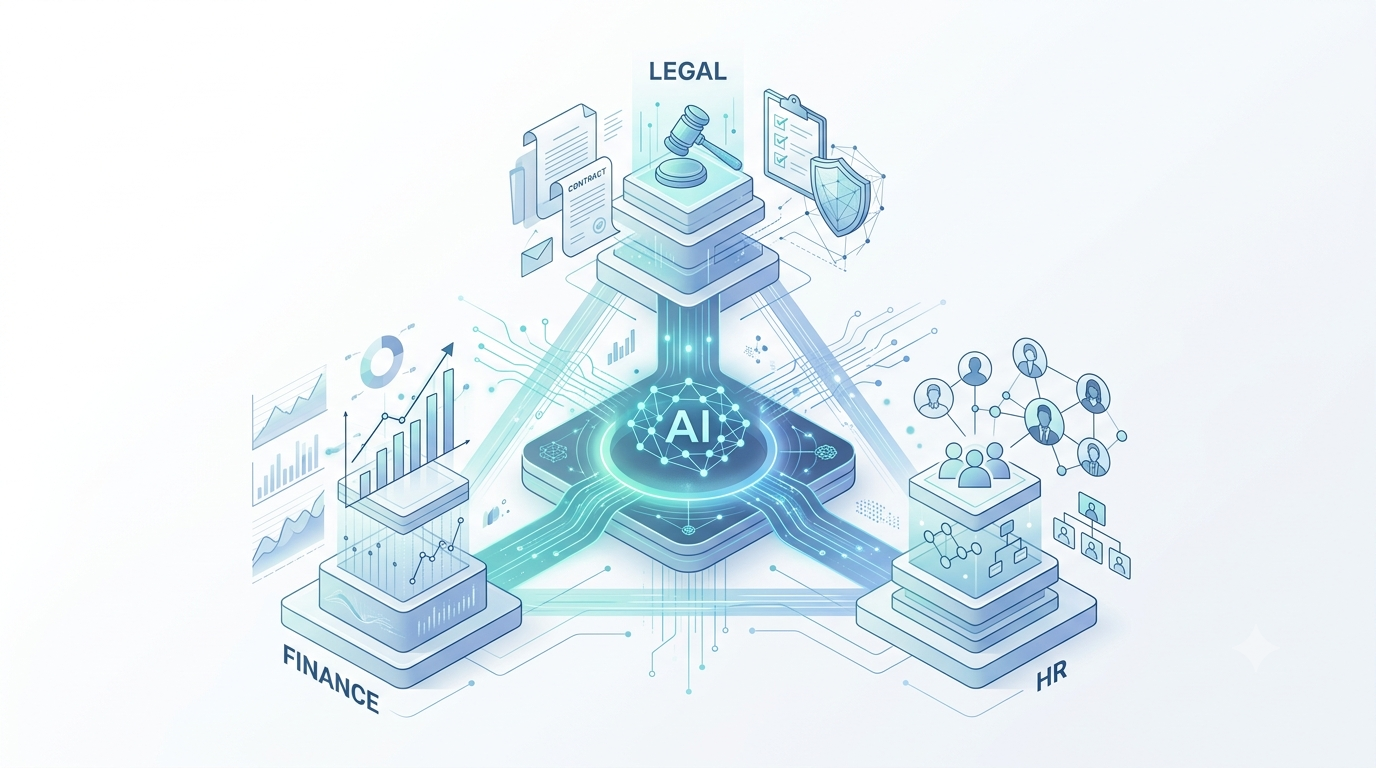
Finance, HR & Legal: The Golden Triangle of Equity Management - And Why Only AI-Native Platforms Can Finally Close It
Finance, HR, and Legal all own part of equity management. Learn how AI-native platforms connect these teams to automate workflows, reduce compliance risk, and eliminate manual coordination.
.svg)
